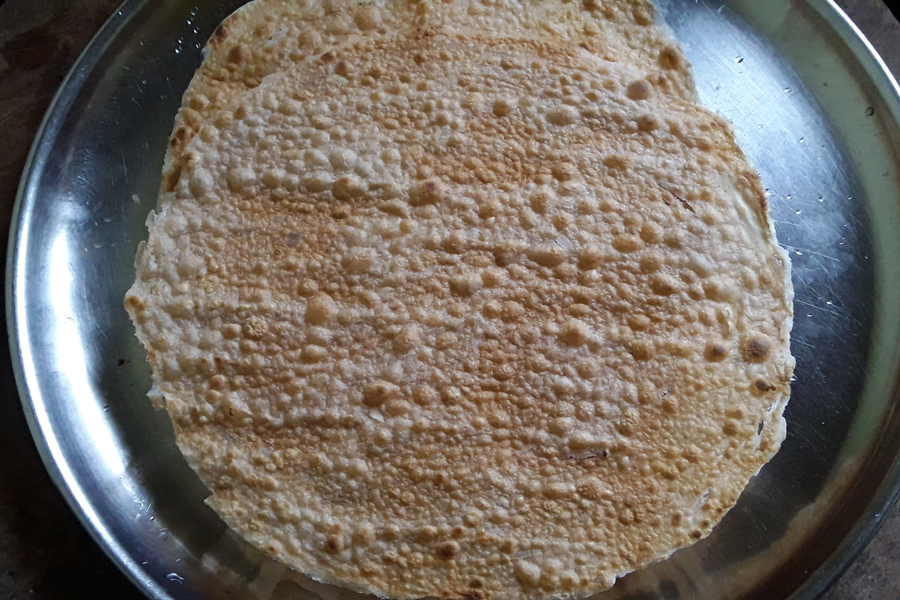
Halasinakaayi happala | Raw jackfruit papad

By Leena Hegde, Puttanamane
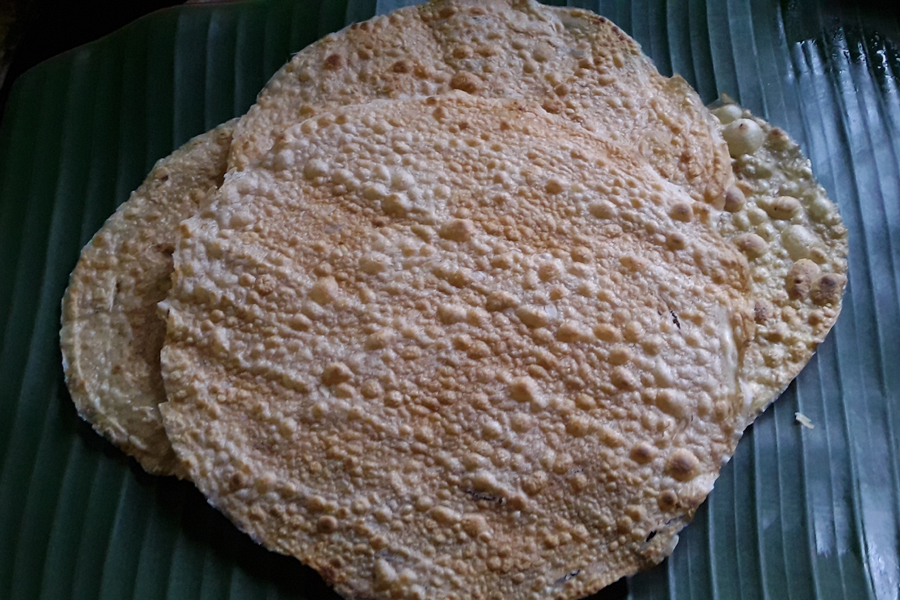
Halasinakaayi happala is a crispy cracker made with raw jackfruit during jackfruit season in summer and enjoyed as a mid-evening snack or as a lunch side dish throughout Monsoon. This traditional and tasty halasinakaayi happala is very popular in havyaka cuisine.

Prep time
2 days
Cook time
-
Cool off time
-
Total time
2 days

Course
Varied
Diet
Vegan, Vegetarian
Difficulty level
Easy
Servings
50 happala
Ingredients
-
1 raw (unripe) jackfruit
- Salt as required
- Water as required
Cookware / Utensils
-
Bowl(s)
- Banana leaves
- Mixer
- Muslin cloth
Instructions
Instructions
- Wash raw jackfruit and cut it.
- Remove pulp. Separate seeds from pulp.
- Wash the pulp and cook them to a soft texture. Let it cool.
- Take them in a mixer jar. Grind to a smooth dough while adding water if and when required.
- Take 3 to 4 cups of water in a large bowl and keep aside.
- Wash banana leaves thoroughly.
- Take a portion of dough and place it on backside of a banana leaf. Give a medium thick round shape to the dough with your fingers.
- Wet your hand with water that was kept in a bowl earlier. Smoothen out the happala or papad surface with your wet hand.
- Make all happala or papad and keep them in sun on a clean and dry place, preferably on a higher floor. You can cover them with a mesh to avoid dust particles during strong wind.
-
In the evening take them inside. At night or next morning remove banana leaves.
Note: Banana leaf should become soft to remove them. - On the second day, spread them evenly in sun on a clean and dry cloth. Cover them with a thin, dry, and clean cloth.
- In the evening take them inside and let them settle to room temperature. Then store them in an airtight container.
- Roast and add them to your meal or snack as and when required.
Step by step guide
How to make Halasinakaayi happala
1. Wash raw jackfruit and cut it.
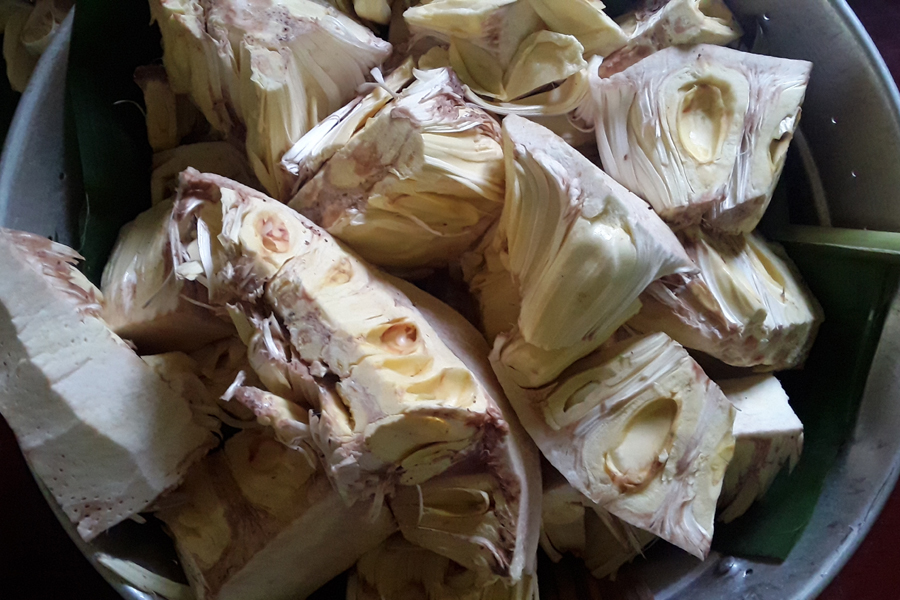
2. Remove pulp. Separate seeds from pulp.
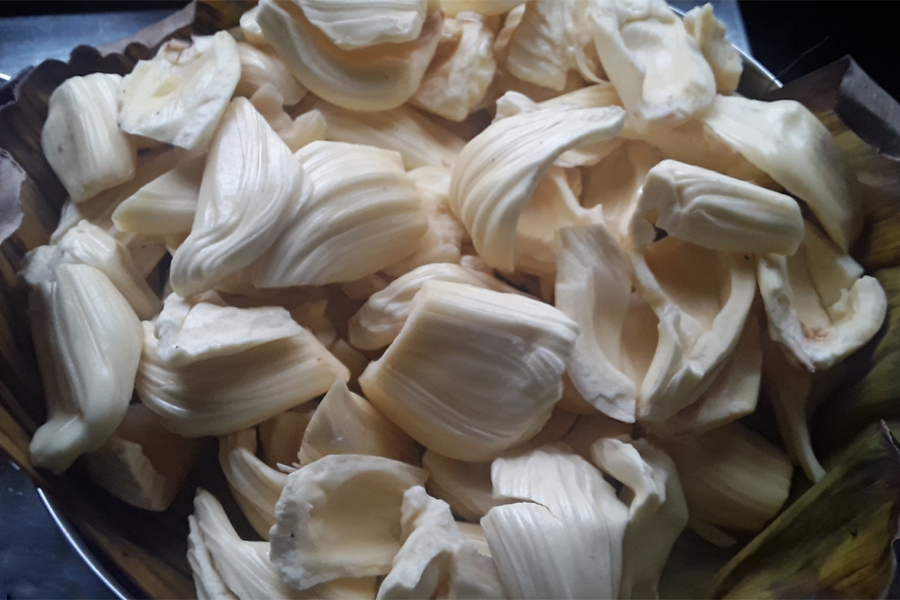
3. Wash the pulp and cook them to a soft texture. Let it cool.
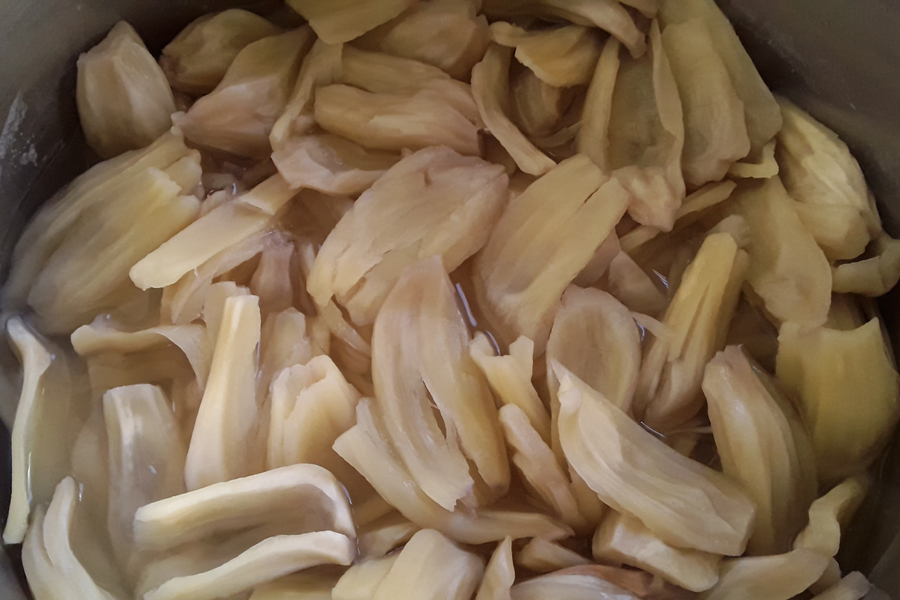
4. Take them in a mixer jar. Grind to a smooth dough while adding water if and when required.
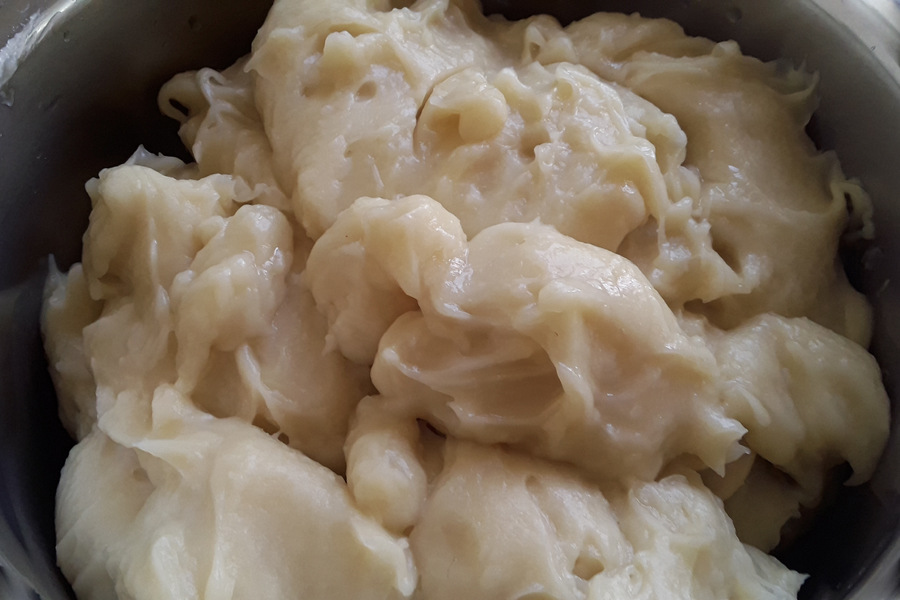
5. Take 3 to 4 cups of water in a large bowl and keep aside.
6. Wash banana leaves thoroughly.
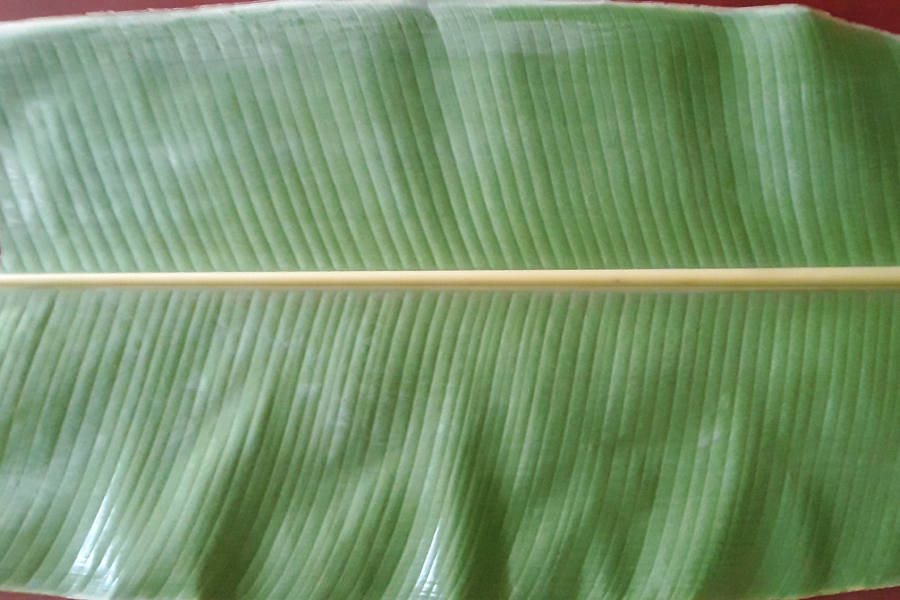
7. Take a portion of dough and place it on backside of a banana leaf. Give a medium thick round shape to the dough with your fingers.
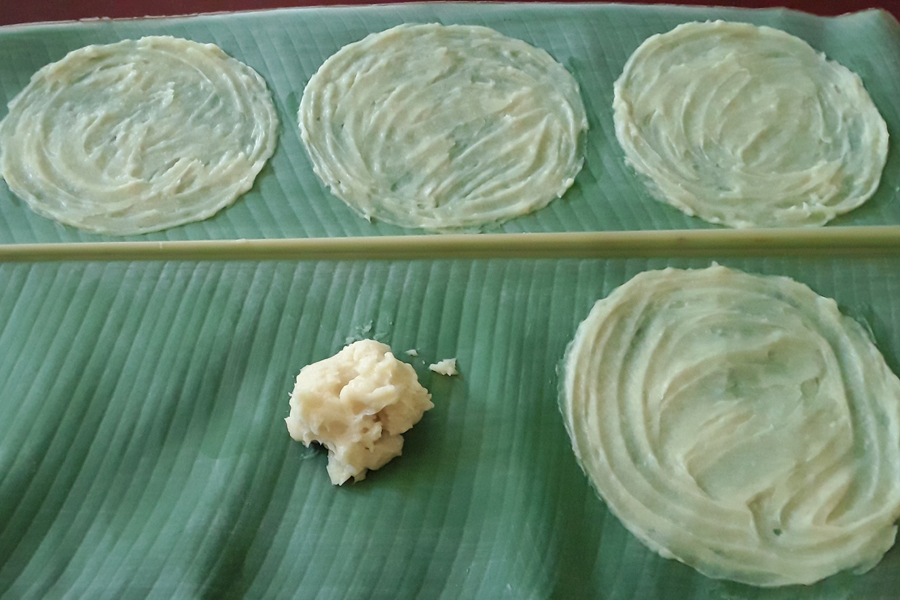
8. Wet your hand with water that was kept in a bowl earlier. Smoothen out the happala or papad surface with your wet hand.
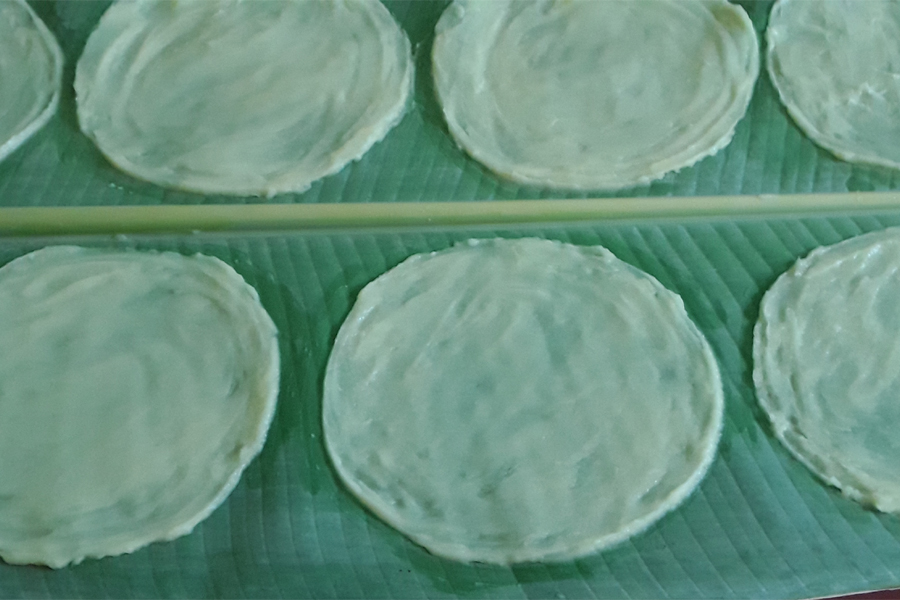
9. Make all happala or papad and keep them in sun on a clean and dry place, preferably on a higher floor. You can cover them with a mesh to avoid dust particles during strong wind.
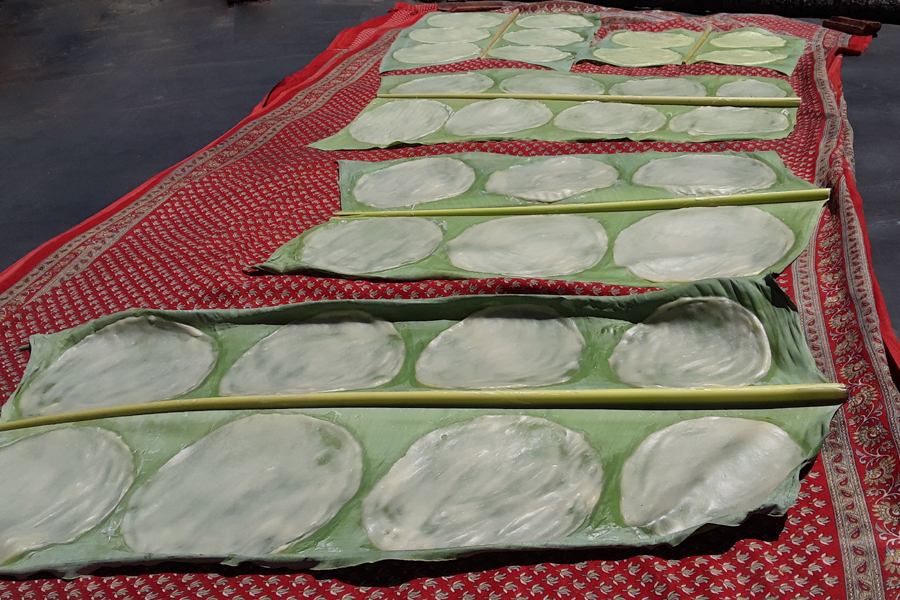
10. In the evening take them inside. At night or next morning remove banana leaves.
Note: Banana leaf should become soft to remove them.
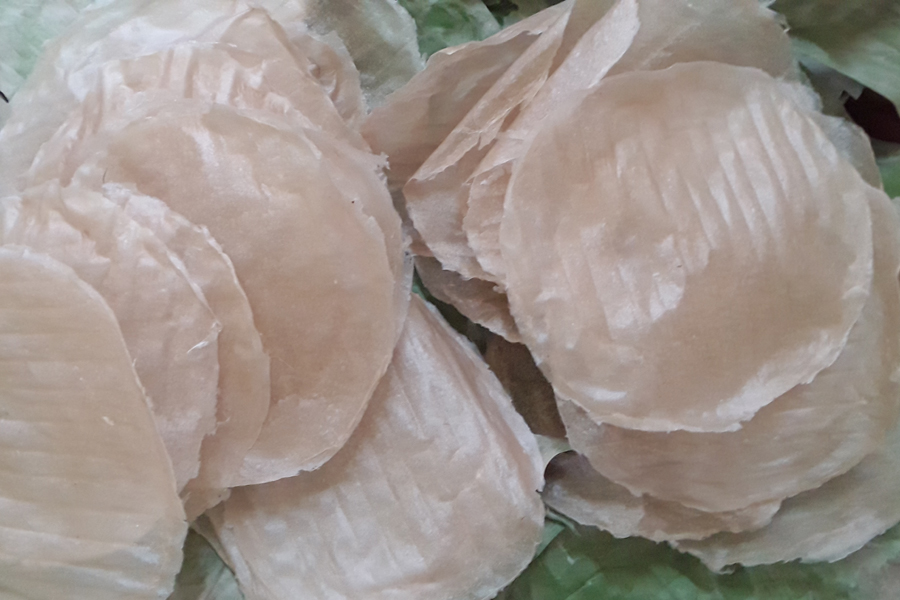
11. On the second day, spread them evenly in sun on a clean and dry cloth. Cover them with a thin, dry, and clean cloth. In the evening take them inside and let them settle to room temperature. Then store them in an airtight container.
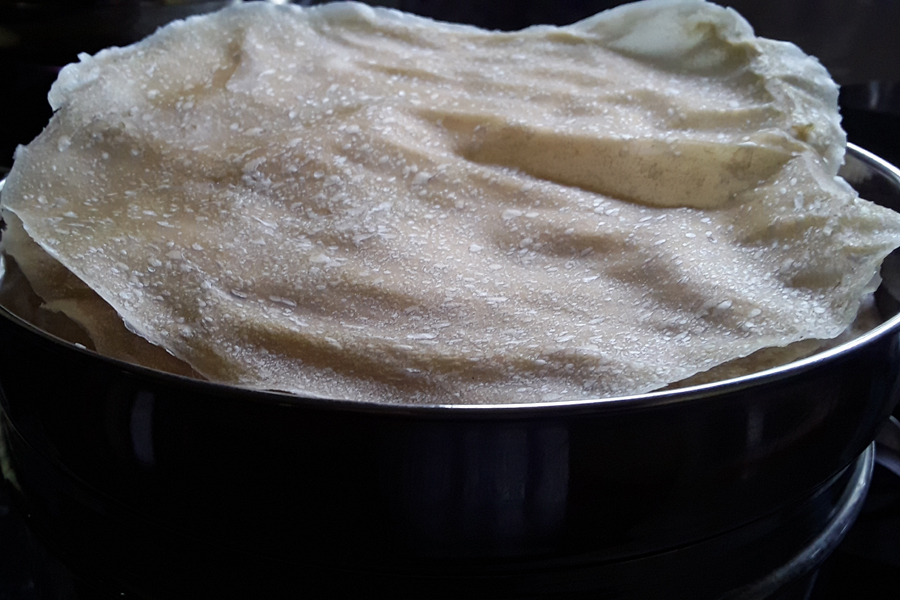
12. Roast and add them to your meal or snack as and when required.
Notes
-
Drying place: Generally happala are dried on higher floors in direct sun, for a more controlled drying process. Instead you can use a drying rack or a table to dry them. Wherever you dry them, make sure the surface is dry, clean, and hygienic.
In most of the havyaka households, Atta (a temporary higher floor built with wood) is built during summer for the sole purpose of drying crops and food items. A clean sheet or cloth is spread on Atta and happala are dried.
- Drying time: Drying time depends on time length in a day you keep it in sunlight, temperature, humidity, and thickness of the happala. It may take 2 or more than 2 days, but make sure there is no moisture left in the dried happala. Flip them every day or on alternative day when keeping in sun.
-
Storage and shelf life: Store well-dried happala in a dry and clean container with proper or airtight lid. Keep it in a cool and dry place. Do not use wet or unclean hand when taking out happala.
Well-dried happala stays good for about four to six months at room temperature. However, the shelf life depends on room temperature, weather condition, storage container and place, and usage style.
Halasinakaayi happala | Raw jackfruit papad

Baalekaayi happala | Raw banana papad

Maavinakaayi gulamba | Raw mango sweet preserve
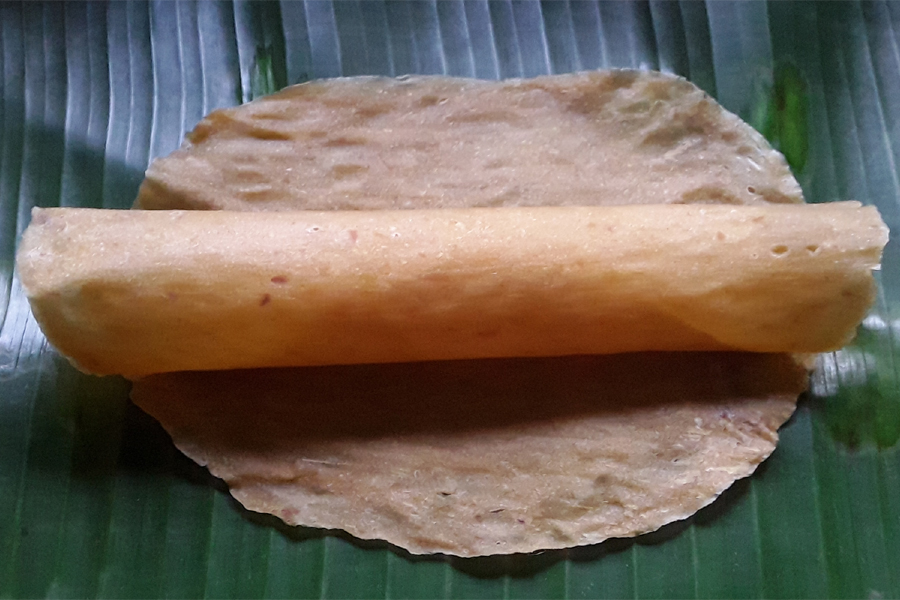
Halasina hannina happala | Jackfruit papad

Kochgaayi | Raw mango preserve

Indian gooseberries salt preserve
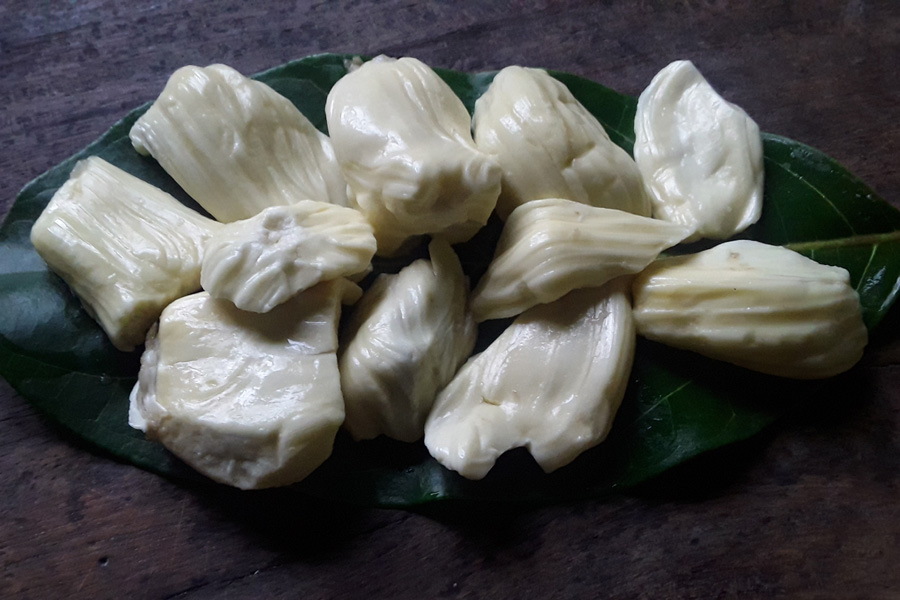
Sole | Raw jackfruit preserve

Sandige menasu | Sun-Dried green chillies

Shikeli | Sun-Dried Bananas

Nellikaayi Gulamba | Indian gooseberries sweet preserve

Nellikaayi adike | Dried spicy Indian gooseberries
