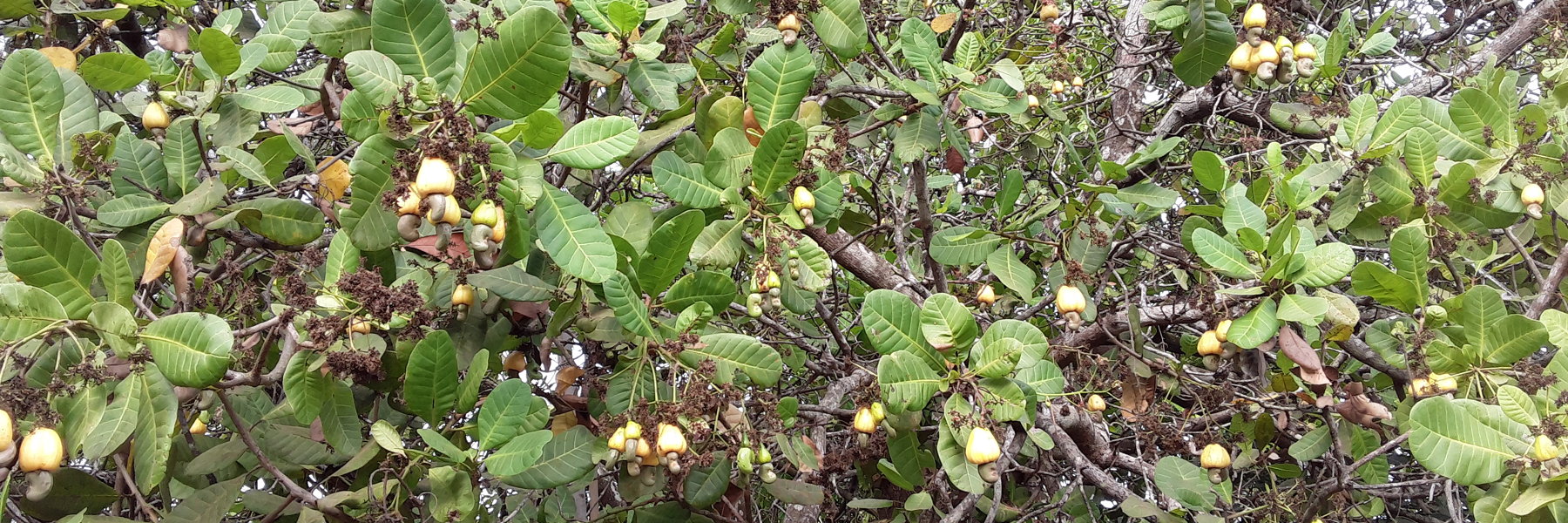
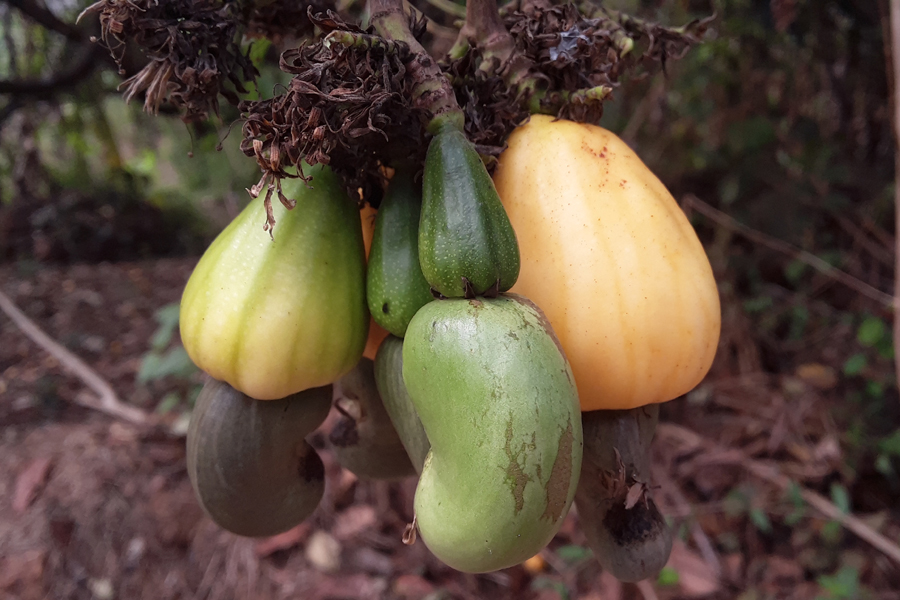
With their lush green leaves and unique fruits, smooth brown bark and a dense, symmetrical, spreading canopy, cashew trees are very beautiful and attractive. Branching occurs very low on the trunk, with the lowest limbs often touching the ground where they can take root. The tree produces a long, fleshy stalk, called cashew apple which resembles a small pear which bears a single-seeded nut in its bottom covered with a hard grey shell.
Cashew is an evergreen tree native to South America introduced to Bharat (India) by Portuguese during the late 16th century. As a resilient and drought resistant tree that is adaptable to poor soil conditions, it offers environmental benefits in the fight to combat deforestation and soil erosion.
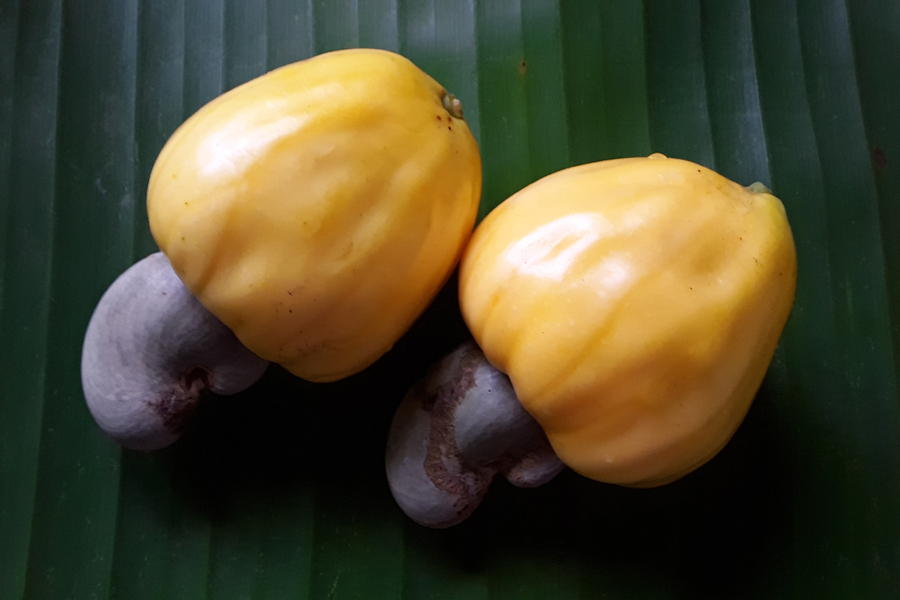
There are different types in cashew tree. Some trees start producing early and some yields after 3 - 4 years. My personal choice of any plant or tree is that is consistent and with maximum lifespan. It is ok if the produce is not overnight! Look at the images of the cashew tree provided in this article. This cashew tree was planted during my grandparents’ era and even after seven decades (70+ years) the tree is standing tall and consistently producing juicy fruits and flavoury nuts to fourth generation. There was another cashew tree with red colour fruits from the same era. (A decade back, the electricity board chopped it off mercilessly. This is what we do in the name of development!) These two trees were our school summer holiday play homes. There are so many childhood memories attached with these cashew trees.
OK, back to cashew tree…
Kingdom: Plantae
Family: Anacardiaceae
Binomial name: Anacardium occidentale
Tree height: 20 ft. to 46 ft.
Colour:
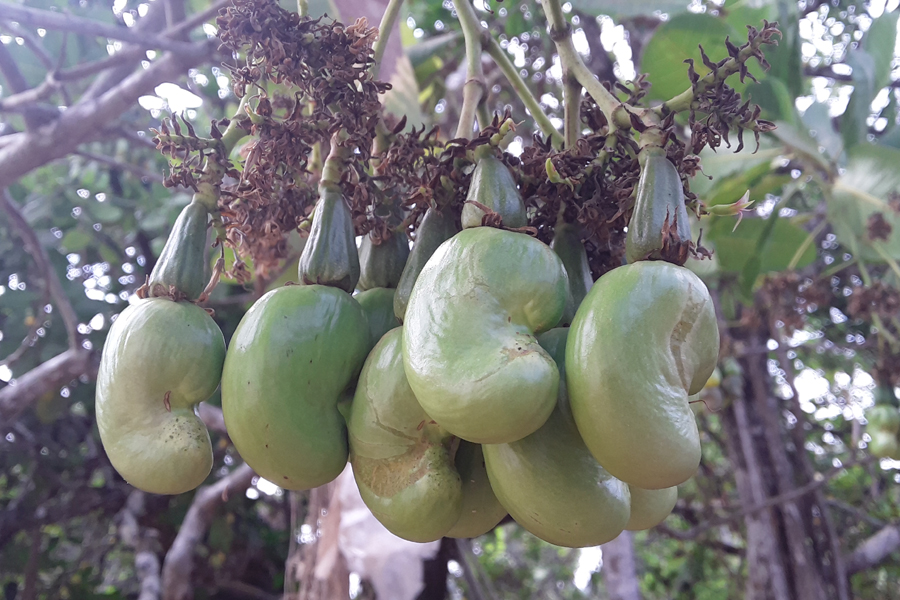
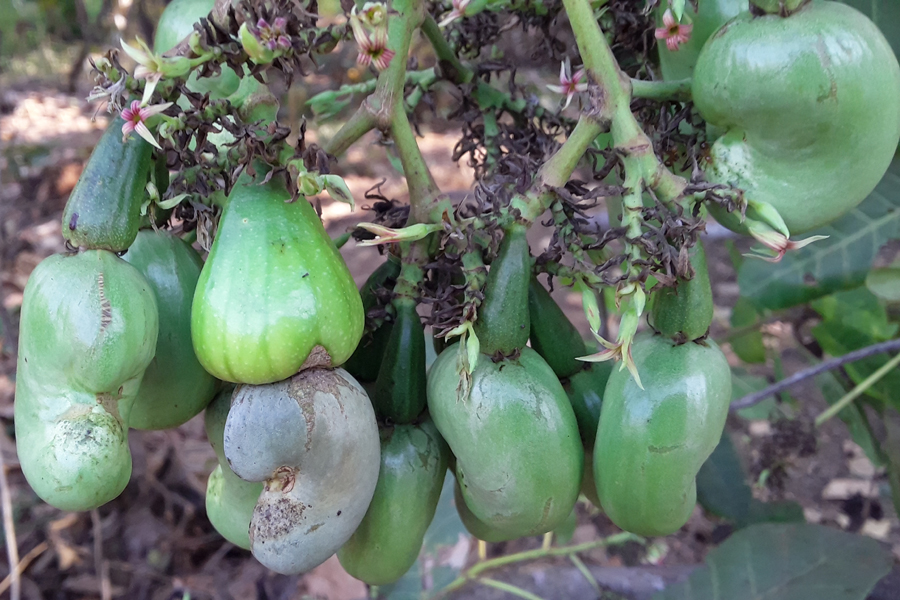
Unripe fruit (False fruit or cashew apple): Green
Ripe fruit (False fruit or cashew apple): Red or Yellow
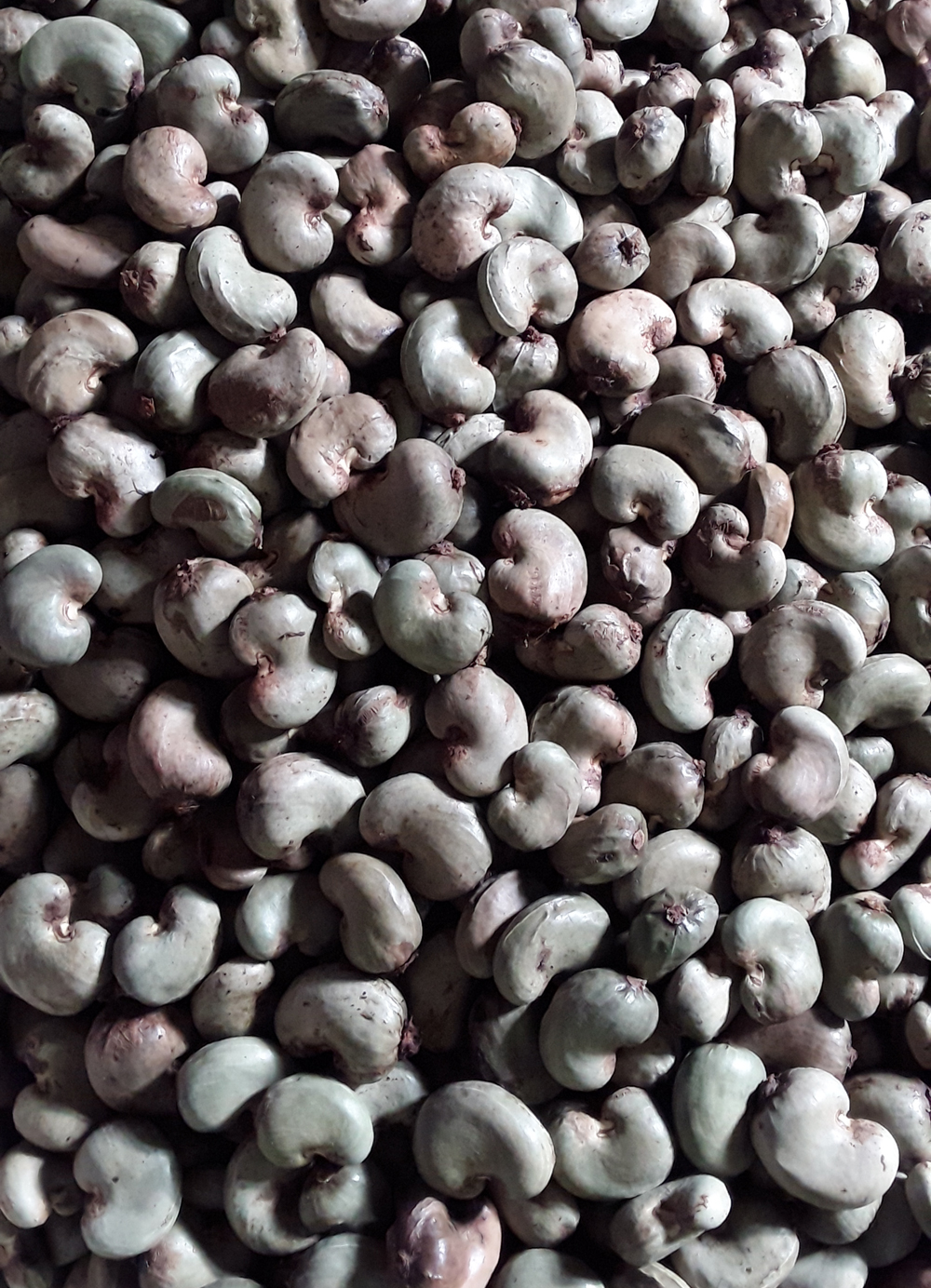
Nut (True fruit): The nut is pink at first, changes to green, then becomes a greenish grey, and then grayish brown as it develops.
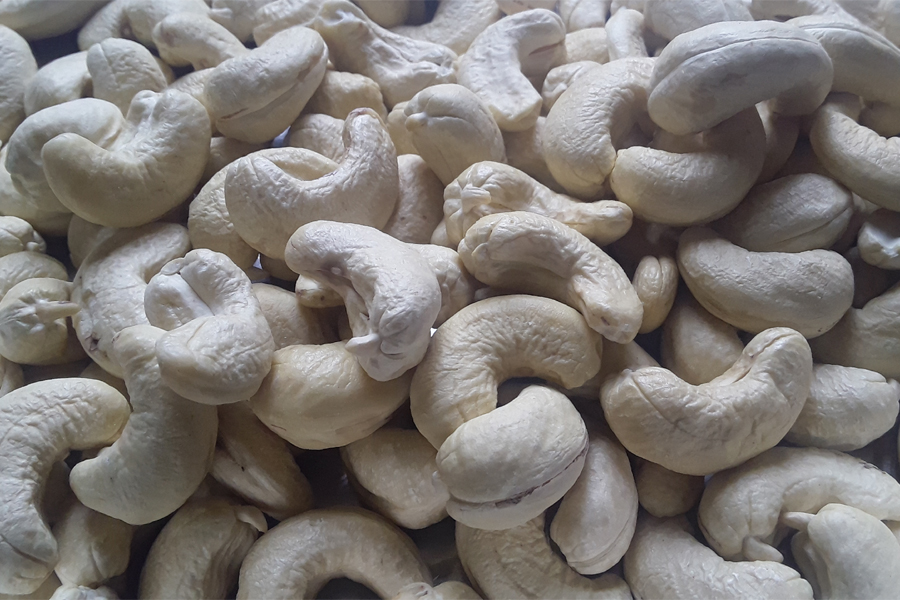
Edible kernel / seed: White or yellowish white
Season
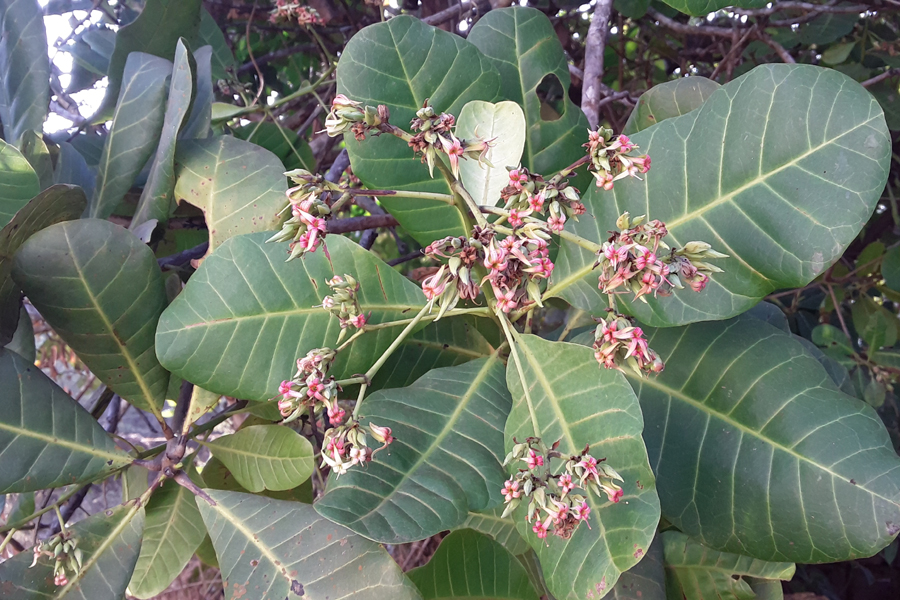
Flowering takes place from December to April. The time for fruit maturity varies from 2-3 months depending on the variety, the health of the tree, and the climate conditions during fruit growth. Harvest takes place only when the apples are fully ripe. Three to four flowering and fruiting in a 3-4 month horizon makes multiple harvesting necessary.
Usage
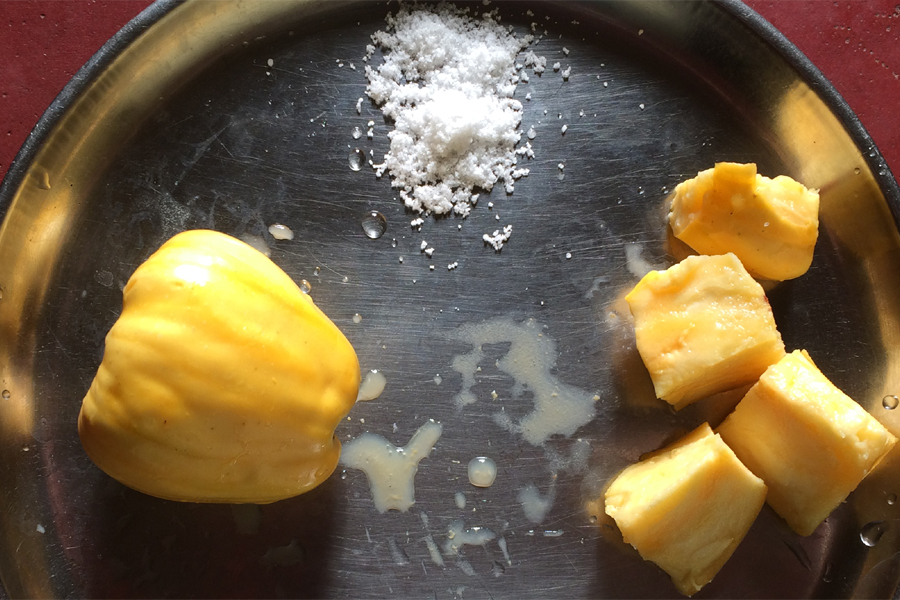
The cashew apples are consumed fresh as its shelf life is less than a day. Top end of the fruit is cut off and discarded and for the rest a pinch of salt is spread and consumed. The cashew apples tend to cause itching and irritation in the throat when consumed. So usually cashew apple fruit is consumed only when fully ripe and with a pinch of salt. The cashew apple juice is rich in vitamin C, antioxidants, minerals and sugar. The one we have is the sweetest and juiciest of all! Season attracts many passersby including monkeys and other wild life.
Cashew nuts kernel or commonly known as Kaju, is used in snacking and cuisines especially in sweet dishes. Cashew nuts are packed with vitamins, minerals and antioxidants.
Cashew nut shells are biomass wastes that can provide energy through different ways. The liquid enclosed in the shell of the nut (cashew nut shell liquid, CNSL) is commonly used for industrial purposes like developing lubricants, varnishes, cements, drugs, antioxidants and fungicides.
Cultivation
Cashew trees are pretty adaptable, but suitable soil sets them up for optimal growth and future production. Cashews grow best on well-drained, sandy loam, and slightly acidic soil.
Cashew trees thrive on the sun and are best adapted to seasonally dry tropical climates. So cashew is planted in warm and sunny region for successful cashew cultivation. A good amount of annual rainfall is crucial. However, heavy downpours during flowering can be detrimental.
Harvest and Production
Cashew apples may be harvested from the tree when they are fully mature (fruit have turned from green to yellow or red) or after they drop to the ground. Cashew apples become sweeter if they are allowed to ripen on the tree after they mature.
Cashew apples are separated from its nuts. The top end of the cashew apple is cut and discarded and the rest is consumed fresh with a pinch of salt.
The outer shell of cashew nut is removed to extract the cashew kernel. The shelling is done manually or by machine.