
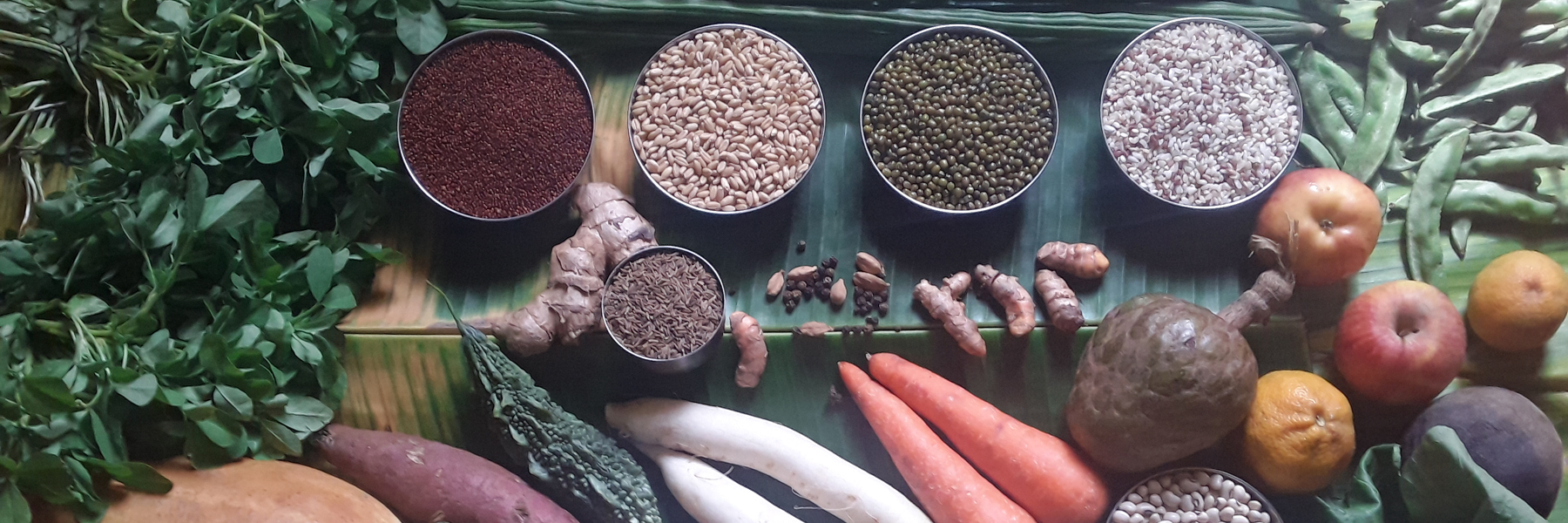
Food has been a basic part of our existence and it is the most important for living healthy and for being active. Throughout history, human survival has depended upon finding, preparing, and consuming different kinds of food. It is certainly understandable why food is a central part of our lives!
Lot has been changed in Havyaka food and eating style. A few changes are for better, and many new food habits, driven by urbanization and convenience, leading to major physical and mental health consequences.
Don’t be surprised if I say there is no connection between our mouth and stomach. Though there is a physical pathway between them, most of the time, food enjoyed by our mouth is disliked by our stomach. This conflict is a classic battle between our brain's desire for pleasure and our body’s need for nutrition. Our taste buds are designed with the perfect unhealthy combination of salt, sweet, spicy, and fat that triggers maximum enjoyment and craving for more.
Our mouth cares about the immediate taste, while our stomach cares about the long term impact on our health. So it is necessary for us to bridge the gap between them.
The significance of food
Food is more than just a source of energy. Food provides us with the essential nutrients needed for our bodies to function effectively. Our health depends on nutrition to a large extent, and nutrition depends on the food that we intake. So food is the most important factor for our wellbeing.
According to World Health Organisation (WHO), Health is the state of complete physical, emotional, and social well-being, not merely the absence of diseases or infirmity. To achieve this perfect blend of positive health, we need to take adequate amounts of essential nutrients in our daily diet.
Each of the nutrients, carbohydrates, proteins, fats, vitamins, minerals, water, etc., plays a unique role in our health.
Simple carbohydrates provide us with quick energy, while complex carbohydrates offer us with sustained energy and fiber.
Proteins, made up of amino acids, essential for growth, building and repairing tissues, supporting immune system, etc.
Often criticized fats are vital for energy, hormone production, cell function, to absorb certain vitamins, etc. So, moderate amount of healthy fat is necessary in our diet.
The micronutrients, vitamins and minerals, are crucial for various bodily functions like bone health, immune response, cell repair, etc.
Water is vital for all physiological processes. Water facilitates digestion, transports nutrients, regulates temperature, maintains fluid balance, flushes out waste, and aids organ health.
Food culture and its impact on health
Food culture is the practices and experiences with our food and food system. Food culture reflects our values, beliefs, traditions, cultural heritage, social habits, food production, and distribution system.
Food is not just about nourishment, but also about our connection with family, community, and our ancient cultural roots. It is not only about taste, but also about understanding importance of our food culture, honouring our surroundings, and taking pride in our culinary heritage.
Havyaka food culture, if not the best, was quite good and positive that supported healthy lifestyle in the community. Our food habits were influenced by local, seasonal, and natural ingredients, nature friendly production and cooking techniques, macro and micro nutrients with a right blend of various flavours / taste in daily meals, and festive dishes were only meant for festivals and occasions. It is true that the many in the community faced socio-economic challenges like availability, accessibility, and affordability. But still we had a healthy food habits as we were dependent on ancient food culture.
Fried items in age old oil were never a part of our menu. Making Holige (sweet stuffed flatbread) with sugar and Maida was not in our tradition. Bottled water was never a custom in havyaka social occasions. Today, these and many other unhealthy food habits are the norms especially in our social occasions.
Our ancestors celebrated and respected food as an essential part. They valued the needs over convenience and desires. Their focus was on local and seasonal ingredients. They lived in balance with the surroundings / environment, something that we are meant to.
With globalisation at its peak, the convenience of commercially processed and packaged food at our doorstep, the insurgence of supermarkets and marketed diet, we have left behind our deeply rooted food culture to the point where many of us not even recognize it anymore. We disconnected the culture from our food and our health began to suffer.
Food cultures are essential parts of our overall health. Food culture is very important for our wellbeing, and to nourish our body, mind, soul, and our environment. We should import food habits only to remove existing flaws in our food culture, but not to introduce many more.
Food and Bhagavad Geeta
Our beloved Bhagavad Geeta emphasizes food's profound impact on our body, mind, and personality. It does not prescribe a conventional strict diet chart. Instead, it quietly offers a path that aligns diet with our mental clarity physical wellness, inner peace, discipline, emotions, and long-term vitality. It gently guides us toward an attitude – of awareness, respect, and harmony with nature.
The below quotes from Bhagavad Geeta's most nourshing verses introduce us to a key ways of understanding food.
aayuhsattvabalaarogyasukhapreetivivirdhanaahaa |
rasyaaha snigdhaaha sthiraa hridyaa aahaaraaha saattvikapriyaahaa ||
Food that enhances longevity (life), mind, strength, health, happiness and joy / satisfaction, that which is juicy, oily (healthy fat), stable and pleasant, is dear to one who is saatvik (pure / mode of goodness).
katvamlalavanaatyushnateekshnarukshavidaahinaha |
aahaaraa raajasasyeshtaa duhkhashokaamayapradaahaa ||
Food that is bitter, sour, salty, excessively hot, pungent, dry and burning, are dear to the raajasic (mode of passion) person, causing pain, sorrow and disease.
yaatayaamam gatarasam pooti paryushitam cha yat |
ucchishtamapi chaamedhyam bhoojanam taamasapriyam ||
Food that is stale, tasteless, putrid / decayed, and is left over, also that is pre-tasted and impure, such food is dear to the taamasic (mode of ignorance).
To curb the taamasic and raajasic nature of our mind and to follow a saattvic regime is the only way to have healthy body and mind.
Gita also talks about how offering, gratitude, mindful and balanced eating improves digestion, increases satisfaction, and creates positive energy.
Bhagavad Geeta is not just a spiritual scripture. Hidden within its poetic verses are full of practical wisdom and insights about food, lifestyle, and mind that are still relevant today.
Geeta would be truly meaningful only when we apply its principles in our daily life.
Food and Ayurveda
Ayurveda, the ancient system of medicine offers extensive insights about food and health. In Ayurveda, food is cherished as Maha Bhaishajya, the supreme medicine. Ayurveda approaches food as an integral part of holistic lifestyle, promoting balance and harmony within our body, mind, and soul.
Ayurveda reveals that what, when, where, and how we eat are all vital factors in maintaining health and keeping the diseases at bay. So, food is not just fuel, but a powerful tool to maintain and restore health.
Ayurveda does not offer generic term healthy food. Instead Ayurvedic nutrition is personalised, seasonal, and depends on our constitution (dosha – pitta, kapha, and vata), current imbalances, stage of life, and environment. Ayurveda emphasizes on importance of regularity in daily routine (Dinacharya), including food consumption. Food should be consumed at specific times of the day to align with our body’s natural rhythms. It also highlights the need to adapt our diet and lifestyle according to the seasons.
When the right food is consumed in the right way at right time, we can maintain optimal health and prevent the onset of illness. In essence, food in Ayurveda is seen as the primary and most accessible form of medicine.
Where diet is right, medicine is of no need. Where diet is wrong, medicine is of no use.
Food and Yoga
Food is a pillar of yogic lifestyle, and eating right food and right portion at right time is an essential part of Yoga. Yoga diet is based on the wisdom of Bhagavad Geeta and Ayurvedic tradition. Yoga promotes personalised diet according to nature of our constitution (pitta, vata, kapha) and lifestyle.
Food is sacred in the yogic tradition. It recommends saatvik food. However food does not turn saatvik just with the ingredients used. Every step of food has an energetic impact - how it is grown, how it is bought, cooked, and eaten – on food being saatvik.
Yogic tradition emphasise on aligning our food with seasonal rhythms and local availability. Our food culture has evolved based on our soil and climate to support our digestion and vitality. Eating regionally ensures our food is fresh and suits our environment.
Food should be cooked with intention, devotion, contentment, and gratitude in a clean and peaceful environment with natural or at the least nature friendly materials. A mindful and happy cook will make a meal that tastes better and the positive energy we pour into it will spread on everyone who eats it.
How we eat also defines a saatvik approach. Eating should be performed with complete presence and gratitude. Each meal should be in moderation with filling half the stomach with solid food, one-quarter with liquids, and leaving the remaining quarter for the movement of air. This allows for efficient digestion and prevents overburdening our digestive system.
Balanced diet
Balanced diet can be defined as one which contains a variety of food in such quantities and proportions that the need for energy, amino acid, vitamins, minerals, fat, carbohydrate and nutrients is adequately met for maintaining health, vitality and general wellbeing and also makes a small provision for extra nutrients to withstand short duration of leanness.
Balance looks different for each person. What’s moderation for a laborer might be excess for an office worker. What satisfies and nourishes one person may leave another unnourished. So, balance is personal and we have to discover what is best for us. The goal is eating that supports, not that damages.
Key principles for Mindful and Balanced eating practices
All our ancient wisdoms offer simple guidelines but a powerful framework for turning our daily meals into medicine. None of these wisdoms provide any generic healthy food, but rather nutrition is always personalized. However, there are some foundational principles and core practices that help support our digestion and build vitality.