
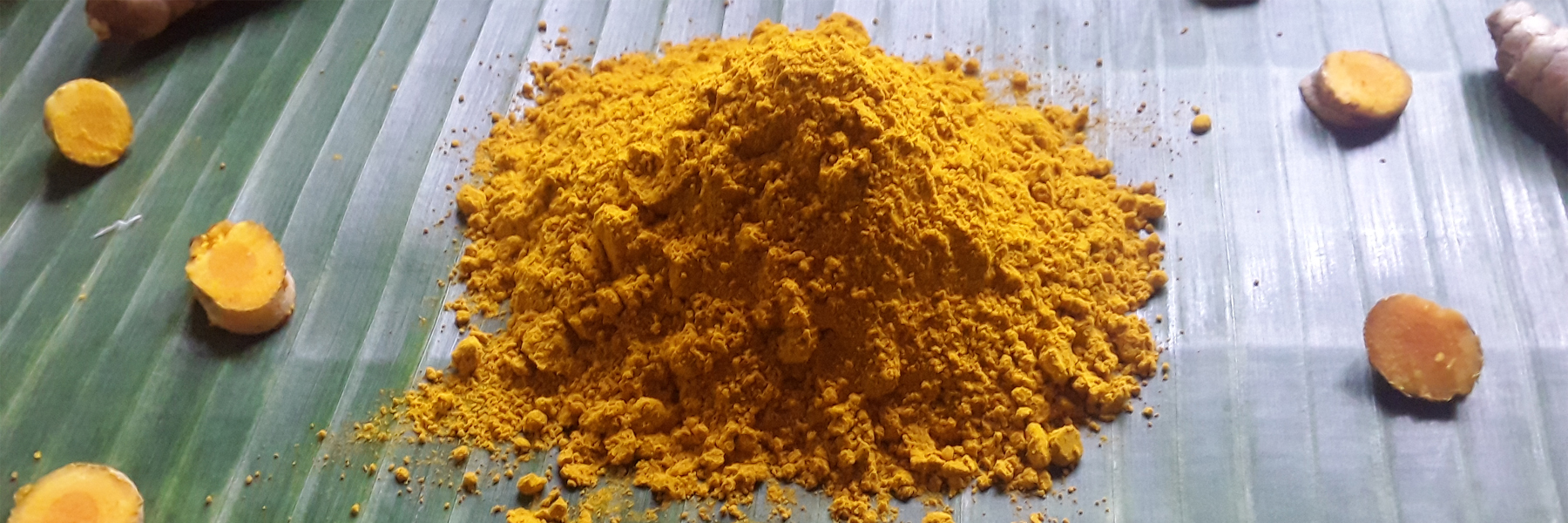
Turmeric or arishina or haldi is an herbaceous perennial plant in the ginger family Zingiberaceae. Its binomial name is Curcuma longa and is native to Bharat (India) and Southeast Asia. Curcumin, a major component of turmeric, gives the spice its yellow color.
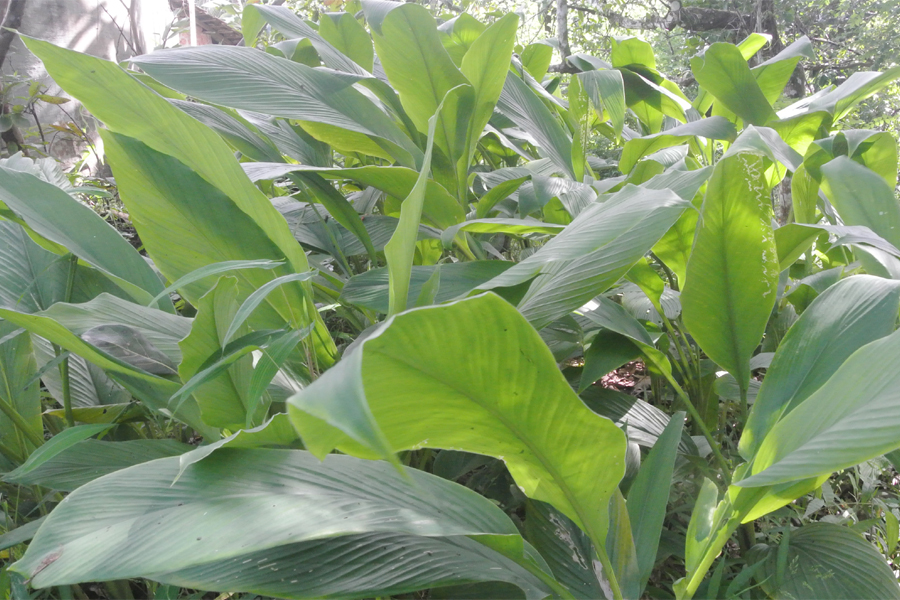
Turmeric plants are non-woody plants (herbaceous perennial) that live for more than two years. Their soft, green stems and foliage typically die back to ground level each winter, but the rhizomes (underground roots) survive, sending up fresh new growth every spring.
Cultivation
Climate and soil
Turmeric can be grown in diverse tropical conditions with temperatures between 20°C and 35°C with an annual rainfall of 1500 mm or more, under rainfed or irrigated conditions.
Turmeric thrives in rich, loose, and well-draining soil packed with organic matter, such as natural compost or well-rotted manure. A heavy clay soil where the roots cannot expand or breathe is avoided.
Planting
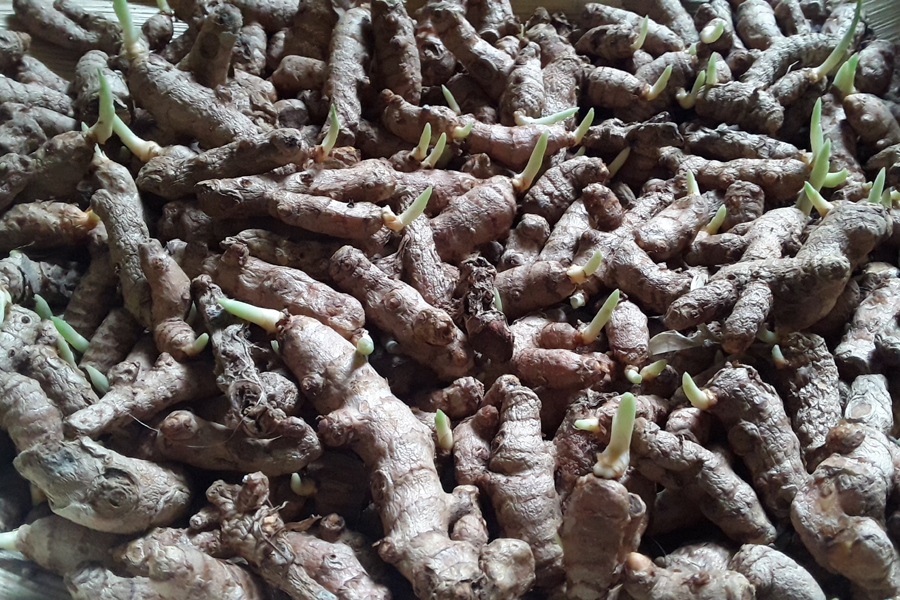
Choose healthy, fresh, and naturally grown turmeric roots. To speed up growth, keep the roots moist for a couple of weeks until green shoots appear before planting. However, pre-sprouting is optional.
The land is prepared with the receipt of pre-monsoon or early monsoon showers. The soil is brought to a fine tilth by plowing. That is breaking and loosening of soil.
Make pits on the bed about 2 to 4 inches below the soil surface and with a spacing of 8 to 10 inches apart to give them room to expand. Lay the roots with the shoots pointing upward.
Caring
Turmeric loves water. So keep it consistently moist but not waterlogged. The plant prefers partial shade to full sun. Optionally natural compost can be applied. Monitor and check plants consistently for any diseases and pests.
Harvesting
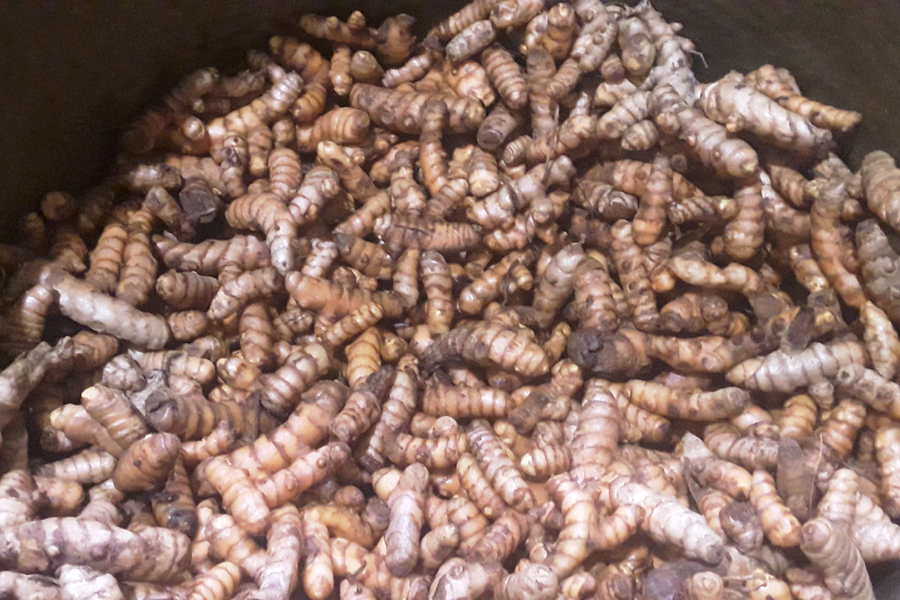
The plants are ready to harvest after 9+ months when the leaves and stems turn yellow and dry out. The land is dug carefully and the entire root clumps are gathered by hand without damaging them. A few pieces with buds are saved to plant for next season.

Processing into powder
Cleaning and drying
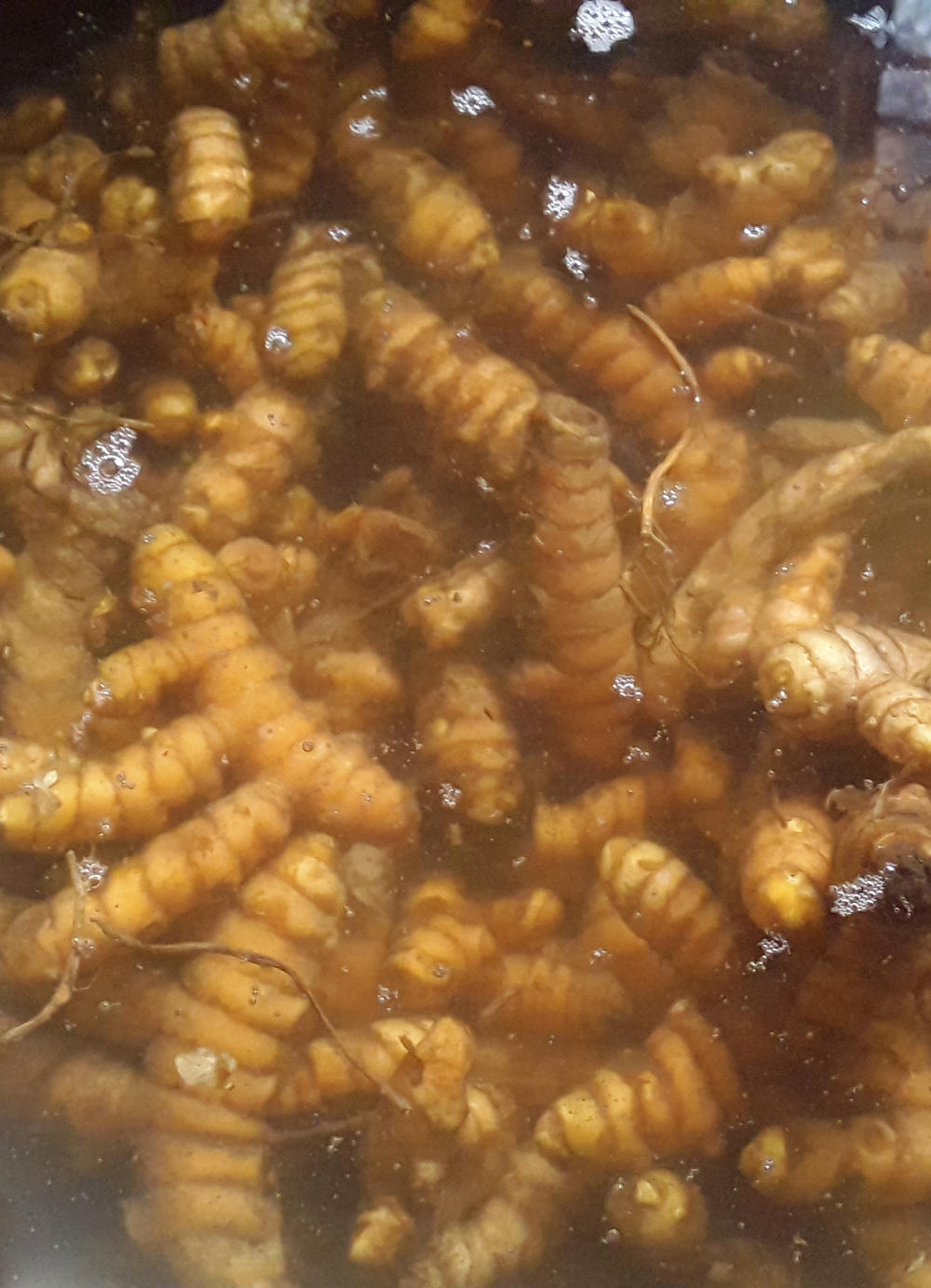
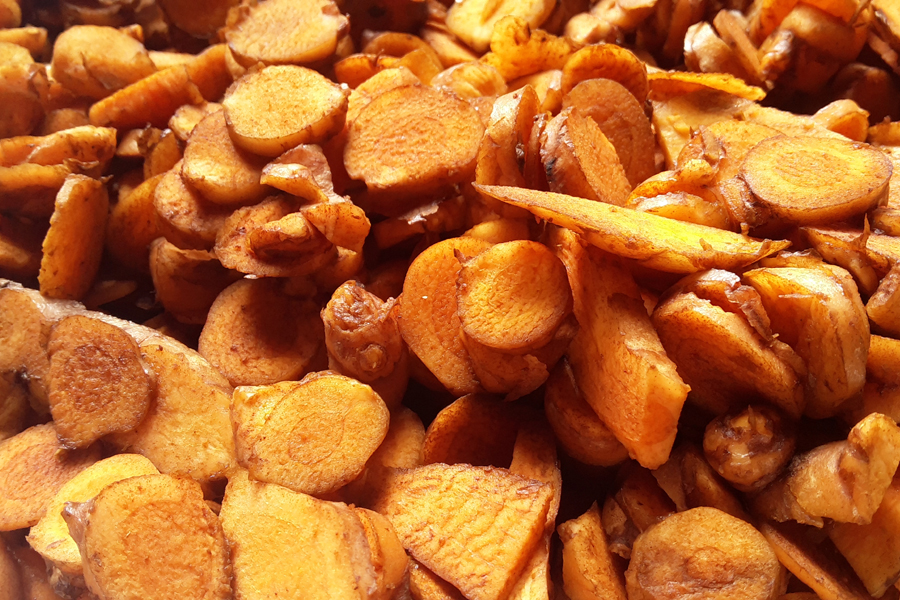
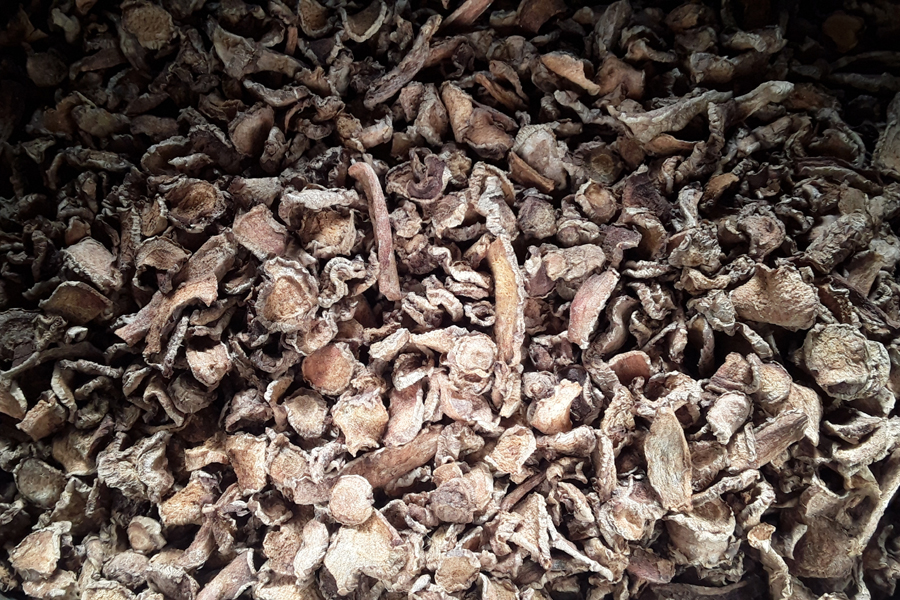
The roots are soaked in water for a couple of hours or overnight and thoroughly washed to remove all soil and dirt. The cleaned roots are sliced into smaller pieces and spread out in thin layers to dry under the sun. The roots are completely dehydrated, i.e. sun dried until brittle. Drying time takes about 10 days.
Grinding into powder
The fully dried and hardened turmeric pieces are ground until the powder is uniform, fine, and free from fibers using mixer grinder.
Homemade turmeric powder can be stored for up to 2 years if kept in an airtight jar in a cool, dry place to retain its volatile essential oils and aroma.
Usage
This golden spice has been used for at least 3000 years in traditional medicine and religious practice. The oldest reference to turmeric was in the Atharvaveda.
This ancient spice is one of the key ingredients in our culinary practice. Turmeric is used mostly in savoury dishes, but also used in a few sweet dishes like holige.
Turmeric is thought to have many medicinal properties and used in traditional medicines and home remedies for both preventive and therapy of diseases. In Ayurvedic medicine, turmeric is a well-documented treatment for various illnesses.
Due to its antibacterial and skin-brightening properties, turmeric is widely used in traditional homemade face masks.
Turmeric is also considered as auspicious and used in social, cultural, and religious ceremonies.