
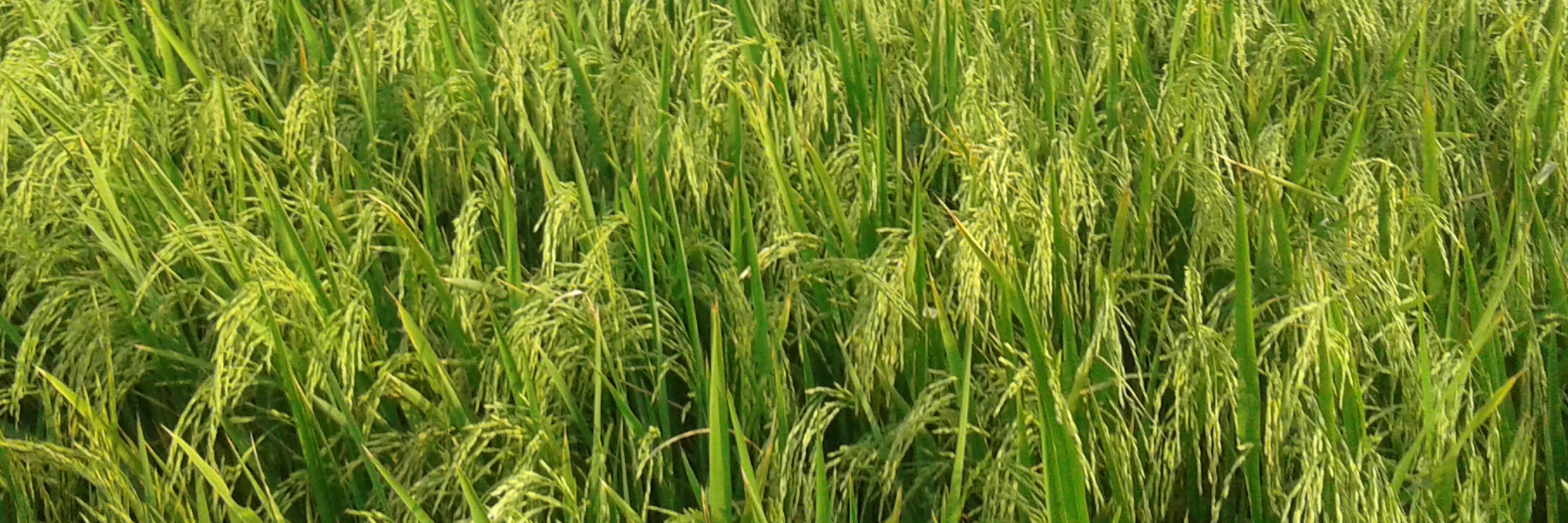
Agriculture and its importance
At its core, agriculture is the foundation of human civilization. It is a way of life, a tradition and even cultural identity passed down through generations. Agriculture is the practice of cultivating natural resources to sustain human life and provide economic development. It combines science, art, skill, tradition, and of course hard work to the practice of cultivation.
Agriculture remains the backbone of global economy. Agriculture indisputably holds a central place in maintaining global food security, being the main source of nutritional provisions for populations. Agriculture feeds the world; it is responsible for our health and sustainability, the preservation of ecosystems, generation of employment opportunities, and the stability of economies. Despite the sector’s importance, farmers face harsh realities.
With wide range of climate and culture, there are many types of agriculture. We will explore three main farming that we Havyakas are into – subsistence farming, mixed / commercial farming, and cattle / dairy.
Subsistence farming
Subsistence farming is growing food in a small-scale primarily to feed our own families. It might not make headlines but plays a vital role by ensuring food security for our households. It is also crucial for economic self-reliance and environmental sustainability. It keeps our traditional seeds and methods alive and reduces dependence on commercial market. Cultivating a wide range of traditional, local crop varieties that adapts to our local climate preserves biodiversity and ecosystem. The subsistence farming is the most powerful uses of agriculture and the benefits are countless.
Generally, in subsistence farming, we grow vegetables, fruits, spices, and few other crops of primitive subsistence farming, reflecting its dependence on simple tools, natural fertility, and traditional cultivation practices.
Mixed / commercial farming
Commercial agriculture is a large-scale, profit-driven agricultural system. It is about producing huge quantities of crops to sell in local or global market. Profit-driven or not, we grow crops like areca nut (betel nut), rice, sugarcane, cardamom, black pepper, cocoa, etc. While these crops primarily grown for sale, we often retain a portion of our harvest for personal consumption or use. So, the term mixed farming is the most accurate description here. But the alarming fact is except areca nut all other crops are almost vanished from havyaka farming.
Despite its benefits, today both subsistence and mixed farming is facing many significant challenges. We will look in to each of them and possible solution for the same.
Key challenges and their solutions in farming
Note: Adaptation and mitigation of challenges in agriculture are not all-cure solutions and should be customized in each particular case.
Lack of farmhands
Reason(s)
Once upon a time when joint family was the cultural norm, we were less dependent on outside workforce. Even when nuclear families started, families helped each other as a community in farm activities, and though the need for external workers had increased, it was manageable. Today, with the vanishing nuclear families, disinterest in traditional farming and younger generations migrating to cities, freebie schemes, and increasing labour cost are making farming difficult.
Though subsistence farming is less labour-intensive when compared to mixed or commercial farming, labours are required - either family members or external.
Solution(s)
Community or cooperative farming
Community farming is where farmers collaborate, share knowledge and resources, and focus on growing food in a way that benefits both their families and the environment. We need to get back where we started or left.
Usually, community farming utilises common land. But we as a farmer have little land for farming. Further we can achieve community farming with the following steps in our respective land:
1. Build a team: Gather likeminded friends, neighbours, and relatives to share responsibilities.
2. Asses and plan: We need to asses our land for a right crop to grow, and plan a budget to cover man hours. (If necessary plan for seeds, tools, etc. expenses as well.)
3. Organize and setup: A rotating schedule can be organized for the team members with tasks such as fencing, sowing, planting, weeding, watering, etc.
4. Harvest and distribution: Distribute / share / exchange the harvested produce among community team and sell the excess.
OK, it looks 4 simple steps. But there is a catch when one land is bigger than other or some crops requiring more man hours or produce is lost due to unforeseen circumstances. To overcome these, a proper strategy – like man hours to man hours or cash or produce or profit / loss sharing, etc. - should be drawn with a team during planning phase.
Developing a sense of community is crucial for sustainability.
Wildlife threats
Reason(s)
Increased urbanization, massive deforestation, and infrastructure constructions (dams, roads, etc.) are forcing wildlife to forage in farming areas.
Solution(s)
Physical barriers and fencing
Fencing is one of the oldest, simplest, and effective ways to prevent wild animals. Fencing can be built using locally available materials which is cost-effective. Mesh fencing is another option. Roof covering is necessary for these types of fencing to keep the climbing animals like monkeys away. Roof cover is feasible only for small plants like vegetables. For large trees solar fencing would be ideal.
Natural repellents
Though not very effective these days, natural repellents keep wild animals and insects at bay at least for some time. Burning cow dung, dry husks of arecanut (Adike sippe), or any other materials that create heavy smoke. Spraying neem oil or chilli-garlic paste around the field deters monkeys and other wild animals due to its strong odour.
Weed problems
Our farming practices often face challenges from weed growth, which impacts crop productivity by competing for essential resources like nutrients, water, and light. Soil fertility influences weed germination and growth by providing nutrients that benefit both crops and weeds. Weed increase production cost, harbour pests and diseases, and decrease crop quality.
Solution(s)
Burning field before sowing / planting
Soil burning is a fast and low-cost traditional practice before sowing or planting. It helps to control weeds and reduces pests and diseases. However, too much burning may cause air pollution, destroy soil organic matter and increase risk of nutrient loss.
Mulching and soil coverage
Applying mulch, like straw, bark, leaves, or wood chips, creates an effective barrier on the soil surface to block weed growth. Make sure straw or hay does not contain any weed seeds. Another effective way is to spread two layers of old newspaper. Mulch suppresses light penetration, reducing weed seed germination while conserving soil moisture and promoting soil fertility.
Removing weeds manually
Removing weeds manually with hands is little time consuming but worth the effort. Removing the entire root is crucial, if broken they often regrow. Before weeding damp the soil, as this loosens the plant grip, making it easier to extract the entire root. Hand tools like hand fork, trowel, or any hand weeder can be used to pry out stubborn, deep-rooted weeds.
Remove weeds early, especially when they are tiny, since small roots come out easily with less effort. Prevent future weeds by mulching bare soil and removing weeds before they drop seeds into your garden.
Pest and diseases
Reason(s)
In most cases, pests and diseases are triggered directly and indirectly by human activities that disrupt the natural systems and balances in agricultural ecosystems. From the way we plant crops to use of fertilizers and pesticide to climate change to global trade have created conditions that allow pests and pathogens to thrive.
Solution(s)
Preventive methods
Curative method
Weather and climate issues
Reason(s)
Though natural factors can cause climate shifts, these issues are primarily driven by human activities – deforestation, industrial farming, burning fuels, decomposing waste, industrial processes, etc. – release vast amount of heat-trapping greenhouse gases like carbon dioxide, methane, and nitrous oxide which has rapidly accelerated global warming and pushed farming into increasingly uncertain territory.
Solution(s)
Fragmentation of land holdings
Reason(s)
With the growing individualism, our family system has seen a drastic change. With each generation, land is divided among heirs, resulting in smaller and smaller lands. These are often economically unviable, preventing us from achieving economies of scale and insufficient for sustaining a family’s livelihood. This is a critical issue with weak solutions.
Solution(s)
Soil degradation
Reason(s)
There is a wide range of factors that are responsible for soil degradation.
Physical factors: Loss and depletion of fertile topsoil due to floods, surface runoff, landslides, winds and storms, intensive tillage, heavy machinery use, industrial agriculture, lead to the degradation of soil. These factors cause different types of soil erosion and detachment, wearing away the topsoil and organic matter.
Chemical factors: Unfavourable changes in soil chemistry, caused by chemical / synthetic fertilizers and pesticides, diminish soil nutrition. Industrial and mining activities release toxic chemicals, effluents and wastes that pollute soil.
Biological factors: Improper farming practices like intensive farming, mono-cropping, excessive tillage, continuous cultivation, and poor management reduces biodiversity, diminished microbial activity, and loss of humus, leading to poor nutrient cycling and reduced fertility.
Ecological factors: Deforestation and the loss of ground cover contribute to the ecological degradation of soil by exposing it to erosion and causing disruptions in ecosystems. Urbanisation and concretisation destroys vegetation cover. Drainage runoff from urban areas contains pollutants that contaminate water bodies and disrupt ecosystems. Deforestation and urbanisation contribute to climate change - altered precipitation patterns, increasing temperatures, and extreme weather events.
Solution(s)
Stop deforestation: Stop land conversion for urban expansion and infrastructure construction. Vegetation cover promotes soil binding, aeration, water-holding capacity, and biological activity.
Use natural compost: Natural compost is a nutrient-rich soil amendment produced by the natural decomposition of natural materials like cow dung, food scraps, leaves, and yard waste. It improves soil fertility, enhances water retention, and boosts aeration.
Practice crop rotation: This helps to break pest and disease cycles, enhance soil fertility, and reduce the risk of nutrient depletion.
Sustainable agriculture: Reduced tillage, growing cover crops during off season, efficient irrigation techniques, and agroforestry prevents soil erosion and maintains soil health.
Waste Management: Improving waste disposal and reducing chemical use improves soil quality.
Unstable market
Reason(s)
Supply, demand, seasonality, weather issues, transport issues, policies, general economy, geopolitical conflict, etc. contribute to unstable market.
Solution(s)
Market knowledge is very important for a farmer. We cannot grow a crop just because our neighbour did and got a good return. We usually imitate and plant the same crop. With overabundance prices fall. Everybody lose money.
For example, few years back every havyaka farmer started growing Vanilla. Price fell and I do not see anyone growing Vanilla today.
One year there was a high demand for cardamom. So many farmers added more and more plants to their farm. Cardamom takes 2 years to yield and at the same time price fell.
So it is very important to understand supply, demand, and reasons for inconsistent demand. This allows farmers to align crop production with consumer demand, optimize pricing, and avoid post-harvest losses.
Diversification of crops and markets is one of the effective strategies for managing market volatility. By not relying on a single crop or market, farmers can significantly reduce the risks of price and demand fluctuations.
Selling directly to consumer in local markets insulates farmer from volatile wholesale commodity pricing.
Cattle / dairy farming
Dairy farming is an essential part of traditional havyaka agriculture that includes raising cows and buffaloes, to make milk, curd, buttermilk, butter, ghee, and other dairy products mainly for domestic use. Cattle dung is used to make natural compost. Despite its benefits cattle and cattle sheds are disappearing from havyaka households.
Reason(s)
Shortage of farmhands, lack of interest from younger generations, younger generations migrating to urban leaving ageing workforce, high cost of quality cattle food, increasing maintenance cost , loss of grazing land due to urbanisation, and a general lack of interest in physically demanding labour have made this traditional farming decline.
Solutions(s)
Implementing community managed shelters, community grazing lands, community dairy, and community fodder banks. Community fodder bank is where local farmers pool surplus crops and grasses for a stable feed supply during crisis. These cooperative agricultural systems help to overcome many issues and can transfer burden into a profitable farming.
Monetizing byproducts like dung for natural compost, biogas for cooking and electricity. This offsets energy costs.
Conclusion
Humanity and civilisation cannot survive without agriculture. Farming is the fundamental pillar of human civilisation as it provides food to sustain our society. It provides raw materials to clothing, shelter, and medicines. Farming sector remains a foundational driver of local and global economies. So we just cannot get away from our traditional practice of farming. With the changing time farming was / is / will face challenges. Challenges also provide opportunities and we have to find that break with solutions that are sustainable.